South African Cabernet Sauvignon: A Class of Its Own
Spend enough time with good Stellenbosch Cabernet and you start to recognize the signature. Blackcurrant and dark cherry, certainly, but also cedar, graphite, dried herbs and that savory, slightly earthy edge that keeps the fruit in check. The wines have the ripeness you would expect from the Cape’s long, warm growing season, yet the best of them never feel simply big or plush. There is freshness, tension and a firmness to the tannins that gives them shape and, in the best bottles, real longevity.
It is what makes South African Cabernet so compelling: enough generosity to satisfy anyone who loves New World Cabernet, but with the restraint, detail and savory complexity that keeps you coming back to the glass.
Cabernet has been part of the Cape for well over a century, but Stellenbosch is where it became serious. Over decades, producers learned which slopes, soils and exposures could give the grape both ripeness and restraint, and some of the country’s most respected estates built their reputations around it. Today, Cabernet Sauvignon is not simply another international variety grown successfully in South Africa. It has become one of the clearest ways to understand what Stellenbosch can do at the highest level.
The story begins long before Stellenbosch Cabernet became an international name, at a time when the Cape’s wine industry had very different priorities.
Stellenbosch: The Heart of South African Cabernet Sauvignon
Drive through Stellenbosch and it quickly becomes apparent why Cabernet has done so well here. Vineyards rise onto the lower slopes of the Simonsberg and Helderberg, disappear into sheltered valleys and reappear on elevated sites where changes in aspect, altitude and distance from the ocean can materially alter what ends up in the glass.
The region has the warmth Cabernet needs to ripen properly, but it is rarely a simple story of sunshine. Cooling winds from False Bay, particularly around the Helderberg, can slow the ripening process and help preserve acidity, while higher elevations offer another moderating influence. Beneath the vines, decomposed granite, sandstone, shale and clay create further variation from site to site.
For Cabernet, that matters. The grape needs time. Pick too early and its tannins and herbal character can dominate; push ripeness too far and the wine can lose the freshness that makes it compelling. Stellenbosch’s best vineyards allow producers to walk that line particularly well.
There are broad regional tendencies, although they should never be treated as rules. Simonsberg Cabernet can be deeply structured and concentrated, with dark fruit and serious aging potential. The Helderberg, with its maritime influence, often brings a savory freshness and firmness to the wines that is immediately appealing to lovers of more classical Cabernet.
What makes Stellenbosch particularly interesting, though, is how quickly those generalizations begin to break down. Two vineyards only a few miles apart can produce Cabernets with very different personalities. That diversity is not a complication to be explained away; it is one of the reasons the region remains so rewarding to explore.
What Does South African Cabernet Sauvignon Taste Like?
Good South African Cabernet is about more than a list of blackcurrant, cedar and graphite.
Those flavors are certainly there. Young wines commonly show cassis, blackberry, dark cherry and plum, sometimes joined by tobacco, dried herbs, spice or a distinctly stony, graphite-like quality. Oak may add cedar, vanilla, coffee or dark chocolate, although the better producers tend to use it as a frame rather than the main event.
What makes the best examples compelling is the tension between ripeness and restraint. There is enough fruit to give the wine generosity, but also enough acidity, tannin and savory character to stop it becoming heavy. Herbal notes add complexity without drifting into greenness; tannins give shape without feeling brutal.
With bottle age, that balance becomes even more interesting. The fruit retreats slightly and the wine begins to show tobacco, leather, earth, cedar and dried herbs, while the tannins soften and become more integrated.
For American drinkers, Napa Valley and Bordeaux offer useful reference points, although neither is a perfect comparison. Napa Cabernet can lean toward opulence, polished texture and generous fruit, while Bordeaux is traditionally associated with greater restraint, savory complexity and structure. Many of the best Stellenbosch wines sit somewhere in that conversation without really belonging to either camp. They have their own cadence: Cape sunshine, serious structure and a freshness that keeps the wines alive at the table.
The Producers Behind South Africa’s Cabernet Reputation
South Africa’s Cabernet reputation was not built by one estate or one particular style. It came from generations of growers and winemakers gradually working out what the grape could do in specific corners of Stellenbosch.
Some estates became benchmarks through consistency. Others pushed toward greater precision, isolated particular vineyard sites or showed that Cabernet could carry a distinctly South African identity without losing the classical structure that makes the grape so enduring.
A few names help tell that story particularly well.
Kanonkop: A Stellenbosch Benchmark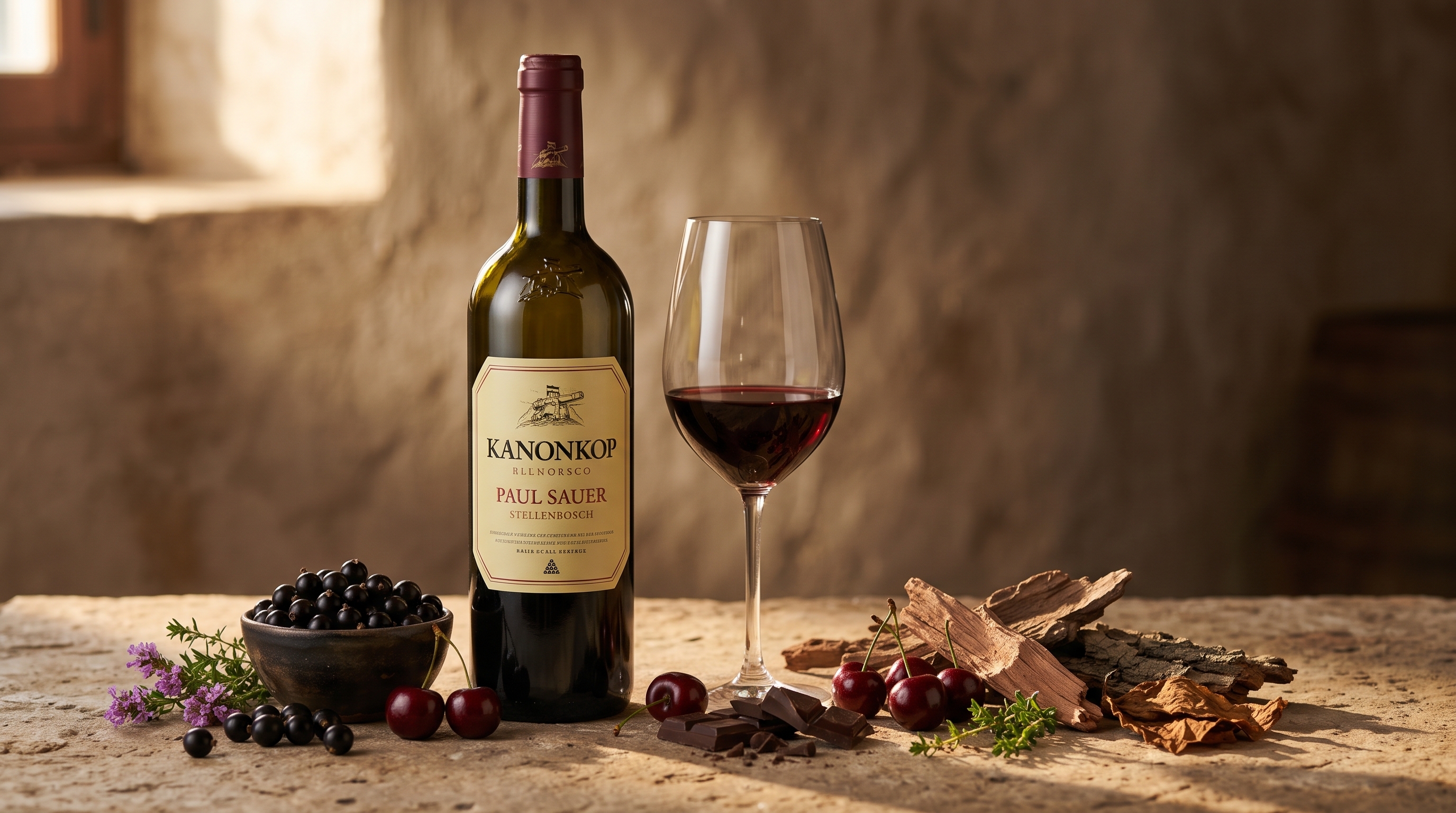 Few estates are as closely associated with the history of South African fine red wine as Kanonkop. Situated on the lower slopes of the Simonsberg, the family-owned estate began releasing wines under its own label in 1973 and went on to establish a formidable reputation for both Pinotage and Cabernet Sauvignon.
Kanonkop Cabernet Sauvignon is admired for its concentration, structure, and ability to age, while its celebrated Paul Sauer demonstrates what Cabernet can achieve as the foundation of a Bordeaux-style blend. First produced in 1981, Paul Sauer brings Cabernet Sauvignon together with Merlot and Cabernet Franc, creating a wine that has become an important reference point for South African collectors.
There is a consistency to Kanonkop's philosophy that helps explain its standing. The estate has remained closely connected to its vineyards, with an emphasis on careful fruit selection, traditional cellar practices, and wines that reward patience.
Thelema: Cabernet from the Simonsberg Slopes
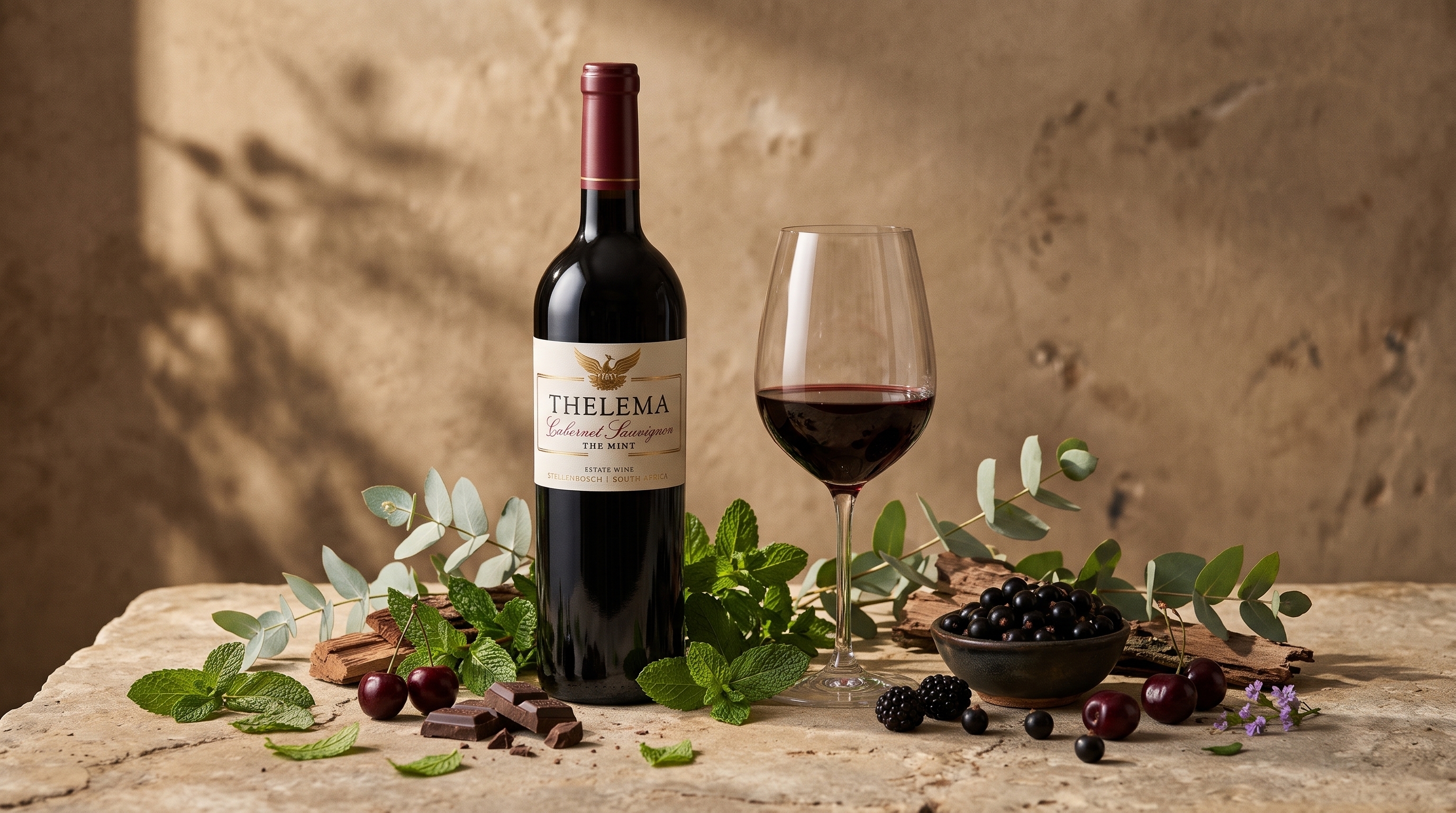
Thelema's modern story began in 1983 when Gyles Webb left a career in accounting and purchased a property on the slopes of the Simonsberg. The estate's first wines were released in 1988, and within a few years Thelema had become one of the most sought-after names in South African wine.
Its Cabernet Sauvignon played an important role in building that reputation, combining concentrated dark fruit, polished tannins, and the distinctive character of its mountain vineyards. But perhaps one of the estate's most interesting expressions is The Mint Cabernet Sauvignon, a wine whose unmistakable aromatic signature has made it a favorite among those familiar with Thelema's portfolio.
The story behind its name is particularly fascinating. Eucalyptus trees border the Cabernet vineyard, and the estate attributes the wine's characteristic mint and eucalyptus notes to aromatic compounds carried through the air and deposited on the grapes. The resulting wine brings together cassis, ripe berries, dark chocolate, and a refreshing herbal character that sets it apart from more conventional expressions of Cabernet Sauvignon.
The Mint has also attracted considerable critical recognition, with the 2022 vintage receiving 95 points from Tim Atkin MW and five stars in Platter's Wine Guide 2025. It is a compelling example of how a particular vineyard can develop a recognizable identity, and why South African Cabernet Sauvignon offers so much more than a single, predictable style.
Rust en Vrede and Stellenbosch Reserve: The Engelbrecht Family's Cabernet Legacy
The history of Rust en Vrede stretches back to 1694, but its modern identity took shape when Jannie and Ellen Engelbrecht acquired the estate in 1977. They restored the property, replanted vineyards, and concentrated on producing serious red wines, particularly Cabernet Sauvignon and Syrah.
That commitment has continued through the next generation under Jean Engelbrecht, whose involvement in Stellenbosch winemaking extends beyond Rust en Vrede itself. Among those ventures is Stellenbosch Reserve, a collection of wines created to celebrate the region's vineyards, heritage, and distinctive character.
Its Ou Hoofgebou Cabernet Sauvignon 2024 offers an accessible expression of that philosophy. Named after Stellenbosch University's historic Old Main Building, the wine brings together cassis, black cherry, dark chocolate, cedar, and subtle spice. Twelve months in seasoned French oak contribute to its structure without overwhelming the fruit, while fresh acidity and elegant tannins give it the balance associated with well-made Stellenbosch Cabernet.
With 93 points from Robert Parker's Wine Advocate, the 2024 vintage provides an appealing introduction to the region's Cabernet tradition and the Engelbrecht family's continued contribution to South African wine.
Tokara: A Modern Benchmark for Stellenbosch Cabernet
High on the Helshoogte Pass, where the slopes of the Simonsberg overlook the Banghoek Valley, Tokara has established itself as one of Stellenbosch's most accomplished modern wine estates. Founded by GT and Anne-Marie Ferreira in 1994, the property began planting Cabernet Sauvignon in 1996, setting the foundations for a portfolio that would become particularly admired for its Bordeaux varieties.
Cabernet Sauvignon remains central to Tokara's identity. The estate's elevated vineyards, with their decomposed granite and sandstone-derived soils, produce wines that balance concentrated dark fruit with freshness, firm tannins, and the savory complexity that has become a hallmark of fine Stellenbosch Cabernet.
The Tokara Reserve Collection Cabernet Sauvignon is an excellent introduction to this philosophy, offering layers of cassis, dark cherry, graphite, and cedar, supported by the structure needed for graceful aging. The estate's Simonsberg Cabernet Sauvignon takes that expression further, drawing on carefully selected vineyards to demonstrate the remarkable potential of its mountain terroir.
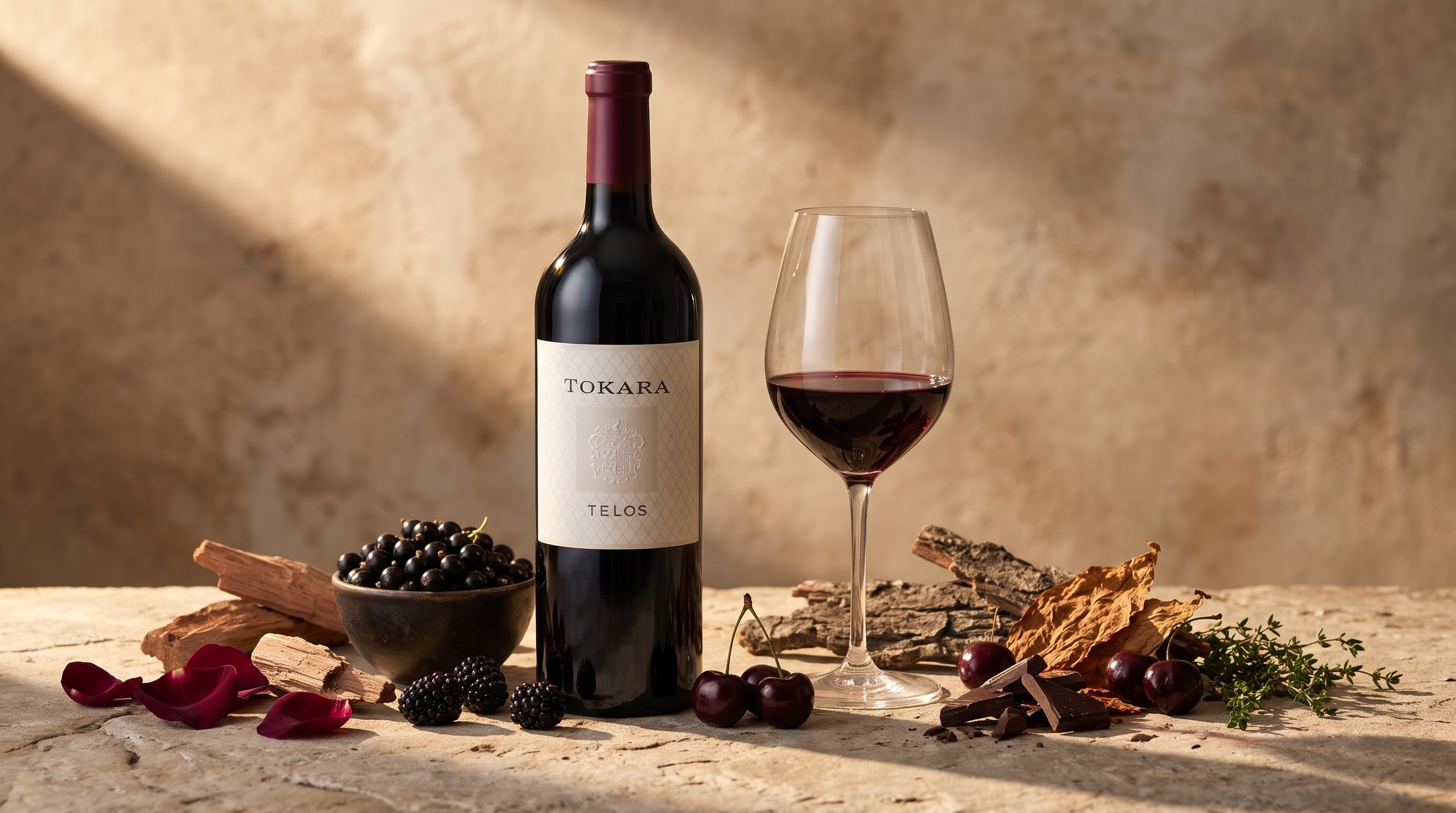
But perhaps the most compelling chapter in Tokara's Cabernet story is Telos, the estate's flagship wine and the culmination of nearly two decades of experimentation. When owner GT Ferreira challenged his winemaking team to create a truly world-class wine, they began exploring individual vineyard parcels, fermentation techniques, and maturation methods in pursuit of something exceptional. The first Telos vintage arrived in 2015, produced in extremely limited quantities from Cabernet Sauvignon grown on the Simonsberg.
The results have attracted international recognition. Telos 2017 earned 97 points from Tim Atkin MW, while the 2018 vintage received 95 points. Over successive releases, Telos has evolved from a Cabernet-dominant blend into a single-vineyard Cabernet Sauvignon, demonstrating Tokara's increasingly precise understanding of its vineyards.
Telos captures much of what makes modern South African Cabernet so exciting. Its reputation rests on concentration, elegance, and the ability to express a particular vineyard with remarkable clarity, placing it among the wines that have helped establish Stellenbosch as a serious destination for Cabernet collectors worldwide.
Cabernet Sauvignon and the Art of Blending
Although single-varietal Cabernet Sauvignon has become an important category in its own right, some of South Africa's most celebrated red wines are blends built around the grape.
Cabernet brings structure, dark fruit, and the tannins necessary for long aging. Merlot can add softness and roundness, Cabernet Franc contributes perfume and herbal complexity, while Petit Verdot offers color, spice, and additional structure. The result can be a wine with greater depth and harmony than any one component might achieve alone.
Kanonkop Paul Sauer remains one of South Africa's most celebrated examples, combining Cabernet Sauvignon, Merlot, and Cabernet Franc in a wine known for its elegance, concentration, and remarkable aging potential. First produced in 1981, it has become a reference point for Bordeaux-style blends from the Cape.
Tokara Director's Reserve Red offers another compelling interpretation. Sourced from the Simonsberg slopes, this Cabernet-led blend incorporates Petit Verdot, Merlot, Cabernet Franc, and Malbec, bringing together layers of dark fruit, tobacco, graphite, and spice. It demonstrates how carefully chosen blending varieties can complement Cabernet's natural structure while adding complexity and texture.
South African winemakers have also explored combinations beyond the traditional Bordeaux varieties. Rust en Vrede, for example, has long worked with Cabernet Sauvignon and Syrah, creating richly textured reds that reflect the character of Stellenbosch while drawing on a broader winemaking tradition.
For collectors, these blends offer another way to appreciate Cabernet Sauvignon, revealing how the grape can provide the foundation for wines of considerable complexity, individuality, and longevity.
How to Enjoy and Cellar South African Cabernet Sauvignon
Cabernet Sauvignon is particularly rewarding at the dinner table, where its structure and acidity can balance rich, flavorful dishes.
Grilled ribeye, roast lamb, slow-braised beef, and venison are natural companions, while mushroom dishes and aged hard cheeses can bring out the wine's more savory qualities. South African preparations such as lamb cooked over an open fire also make a compelling match, particularly with wines that have a little smoky or herbal character.
Serving temperature matters more than many people realize. Around 60–65°F (16–18°C) is generally a good range, allowing the wine's aromas to develop without making the alcohol overly prominent.
Young, firmly structured Cabernets can benefit from decanting, particularly when the wine needs time to open. Older bottles should be handled more gently, with decanting primarily used to separate the wine from any sediment that has developed.
When it comes to cellaring, the producer, vintage, and style of the wine are more useful guides than the grape variety alone. Many approachable South African Cabernets are enjoyable within a few years of release, while more structured examples from established estates can develop beautifully over a decade or longer when stored properly.
For anyone beginning a collection, tasting a younger bottle alongside an older vintage of the same wine can be particularly revealing. It offers a firsthand understanding of how Cabernet evolves, and why certain bottles are worth the wait.
Why South African Cabernet Sauvignon Deserves Your Attention
South African Cabernet Sauvignon has come a long way from its early plantings at the Cape. What began as a promising European variety gradually became central to the ambitions of winemakers who believed their vineyards could produce wines of international distinction.
Today, that belief is reflected in the depth of the country's Cabernet portfolio, from elegant mountain-grown examples to powerful estate wines and carefully assembled blends capable of decades of development.
There is also something particularly appealing about the individuality of these wines. A Cabernet from the Simonsberg can express itself quite differently from one grown on the Helderberg, while a mature bottle from a respected estate can reveal layers of complexity that are difficult to appreciate in its youth.
For American wine lovers familiar with Napa Valley and Bordeaux, South Africa offers another fascinating expression of a grape they may already know well. At Cape Ardor, we believe these wines deserve to be part of that conversation, and we're pleased to help introduce more of them to collectors and curious wine drinkers across the United States.
Frequently Asked Questions
Is Cabernet Sauvignon dry?
Yes. Cabernet Sauvignon is typically a dry red wine, with very little residual sugar. Its ripe blackcurrant, blackberry, and plum flavors can sometimes make it seem slightly sweet-fruited, but the wine itself is usually firmly dry. What gives Cabernet Sauvignon its distinctive character is its structure: noticeable tannins, good acidity, and layers of dark fruit, herbs, cedar, graphite, and spice.
Which South African region produces the best?
Stellenbosch is widely regarded as South Africa's leading Cabernet Sauvignon region. Its varied soils, mountain slopes, and maritime influences create excellent growing conditions, although notable examples are also produced in Paarl, Franschhoek, and Constantia.
What does it ususally taste like?
Expect dark fruit flavors such as blackcurrant, blackberry, black cherry, and plum. Depending on where it is grown and how it is made, you may also find cedar, tobacco, graphite, dried herbs, mint, leather, and baking spice. Young wines can feel powerful and tightly structured, while mature examples often become softer, more savory, and more complex with time.
How does South African Cabernet compare with Napa Valley Cabernet?
South African Cabernet often combines ripe dark fruit with savory complexity and firm structure. Napa Valley Cabernet frequently emphasizes richer fruit and a fuller texture, although styles vary considerably between producers and vineyards.
How should cabernet sauvignon be served?
Cabernet Sauvignon is best served slightly cooler than typical room temperature, at around 60–65°F. If it is too warm, the alcohol can become more noticeable; if it is too cold, the aromas can seem muted and the tannins firmer. Serve it in a large red wine glass with a broad bowl, which gives the wine room to open up and helps concentrate its aromas. Young, structured bottles may also benefit from 30 minutes to two hours in a decanter to soften the tannins and reveal more of the fruit and savory detail. Older Cabernet should be handled more gently. Mature wines may only need careful decanting to remove sediment, as too much air can cause their more delicate aromas to fade.
How does it compare with Pinotage?
Cabernet Sauvignon is typically more structured and linear, with blackcurrant, cedar, herbs, and firm tannins. Pinotage often has a broader, juicier character, with plum, cherry, blackberry, spice, and earthy or smoky notes. Both can produce serious, age-worthy wines, but they offer very different expressions in the glass.