How to Move a Wine Collection Safely

A well-kept wine collection deserves the same care on the road that it receives at home. Whether your cellar holds mature Stellenbosch Cabernet, carefully chosen Burgundy, or cases set aside for the next decade, a successful move comes down to a few essentials: thoughtful packing, steady temperatures, experienced handling, and a suitable cellar waiting at the other end.
In the United States, distance and weather deserve particular attention. Moving across town is one thing; taking a collection from California to New York, or from a northern home to a winter residence in Florida, can mean several days on the road through very different conditions. Knowing how to move your wine collection starts with considering that entire journey, including the hours when the vehicle is parked.
Begin with a clear picture of your cellar
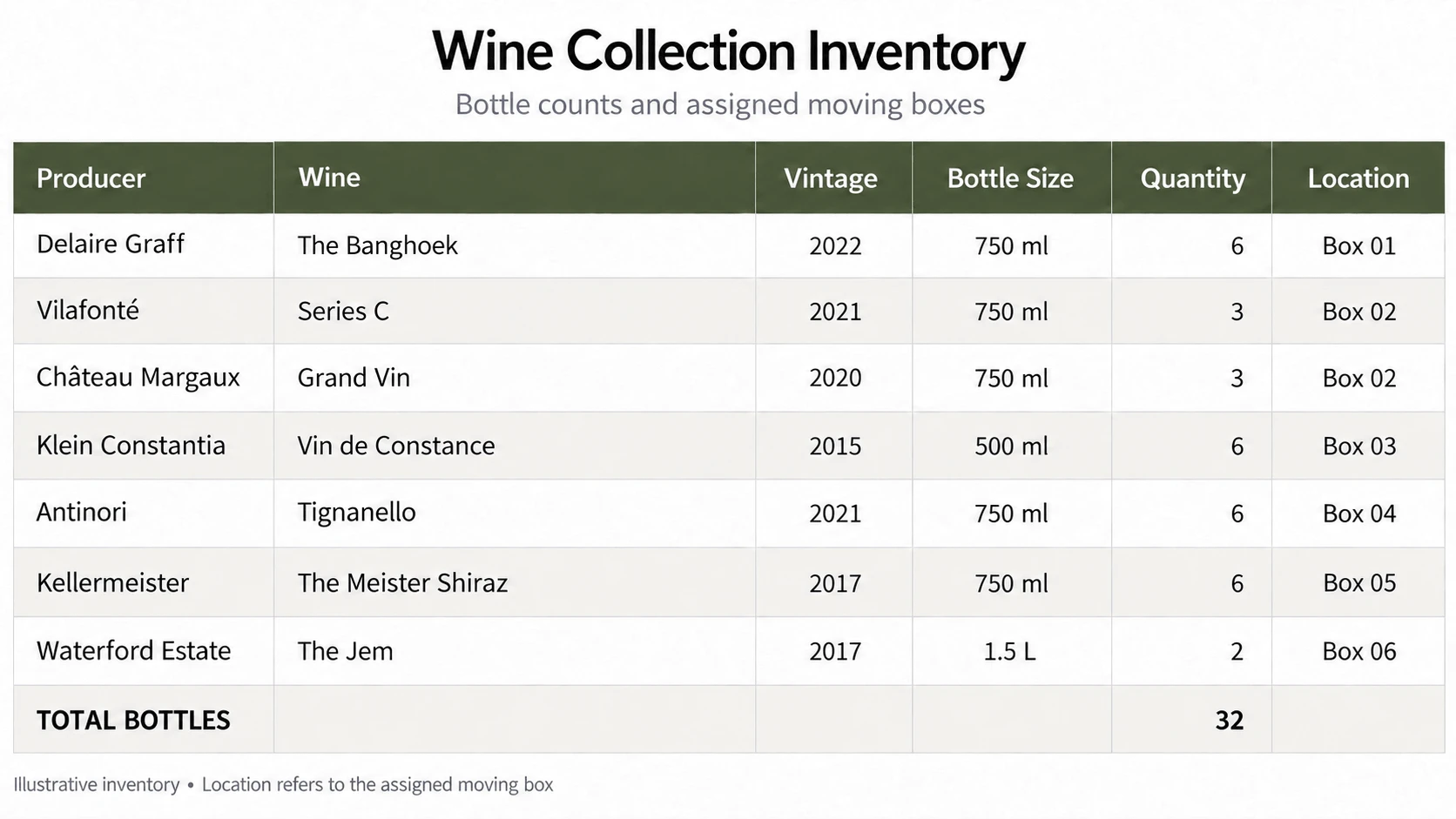
Before choosing boxes or booking a vehicle, spend a little time with the collection itself. An up-to-date inventory makes the move easier to organize and gives you a reliable record of what leaves the cellar. Include the producer, wine, vintage, bottle size, quantity, and location. For your more valuable bottles, add purchase records, provenance, and photographs of labels, capsules, and fill levels. A current appraisal can also be useful when reviewing insurance before the move. [1]
As bottles are packed, give each box a number and match its contents to the inventory. This simple system becomes particularly helpful with a larger cellar: you can account for every case at delivery and know exactly where to find the wines you would like to put away first. Keep a digital copy available on your phone or computer.
Older bottles merit a closer look. Seepage, an unusually low fill level, a damaged closure, or a fragile label is worth noting before the wine changes hands. Sharing those details with your mover allows them to plan individual protection for bottles that need it.
For a practical starting point, see our guide to organizing and cataloging a wine collection.
Consider the weather along the whole route
Most collectors are familiar with the value of a cool, consistent cellar. WSET recommends 50–59°F (10–15°C) for long-term storage, with around 55°F (13°C) offering a useful target. The aim during a move is to preserve that stability as closely as practical while protecting the wine from excessive heat and freezing conditions. [2]
The forecast at your new address tells only part of the story. A mild departure from the California coast may be followed by hot inland stretches; a comfortable arrival in Florida may come after cold nights farther north. On a cross-country journey, review the proposed route, overnight stops, and likely transfer points with the transport company. These examples are reasons to check the actual itinerary and forecast, rather than relying on the season alone.
Where timing is flexible, a milder weather window can make the move easier. Spring and fall are useful starting points, but neither guarantees suitable conditions across the country. For a substantial collection, reliable temperature control offers far more reassurance than choosing a date and hoping the weather cooperates.
A good wine mover should be comfortable explaining the temperature range maintained in the cargo area and how it is recorded. Ask whether the system can both cool and heat as conditions require, and whether it continues operating during overnight stops. It is also worth discussing where the wine would go if a breakdown, winter storm, or delivery delay interrupted the trip.
Transfers deserve the same attention. Wine can travel in a well-controlled vehicle and still spend an uncomfortable afternoon on a warm loading dock or in an unheated warehouse. Confirm that any temporary storage and onward transport receive the same care as the main journey.
Insulated packaging is a useful extra layer of protection because it slows temperature changes. It cannot maintain cellar conditions indefinitely, however, so it works best as part of a transport plan that also accounts for travel time, weather, and delays.
Choose transport that suits the collection
How to move wine a short distance
For a few cases traveling locally, moving the wine yourself may be quite sensible. A direct journey in mild weather, with bottles securely packed in the climate-controlled part of the vehicle, is a manageable proposition. Keeping the wine in its usual storage until you are ready to leave, then bringing it straight into the new cellar, limits unnecessary exposure.
The small interruptions are often the easiest to overlook. Collecting keys, waiting for an elevator, or meeting a contractor can turn a brief drive into a much longer period in a parked car. Having someone ready to receive the wine makes the day easier, especially when temperatures outside are particularly high or low.
When a specialist wine mover earns their place
With several hundred bottles, mature vintages, or a journey lasting more than a day, a specialist wine mover becomes a worthwhile part of the relocation budget. The value lies in coordinating suitable packing, controlled transport, careful handling, and delivery into the cellar. For bottles that would be difficult to replace, those details matter as much as the price of the service.
A dedicated vehicle may reduce transfers and give you greater control over timing. A shared shipment may also be suitable, provided the company can explain its routing, additional stops, and temperature arrangements. Ask how your collection will travel in practice and who remains responsible at each stage.
As with commissioning a cellar, comparable quotes need comparable specifications. Check whether each proposal includes packing materials, inventory handling, temperature records, temporary storage, delivery access, and unpacking. Stairs at one property or a reserved service elevator at another can affect both the price and the schedule. References from collectors with similar moves are particularly helpful.
Can the wine travel with the rest of the house?
It is a reasonable question, especially when a moving truck is already booked. Start by checking that the company accepts wine and what conditions it can maintain in the cargo area. A padded, securely stacked case is protected against knocks, but its contents are still exposed to the surrounding temperature. For a sizeable cellar or a long route through hot or cold states, a separate wine transport arrangement is usually the more considered choice.
Give the packing as much thought as the transport
Good wine packaging holds each bottle securely, separates glass from glass, and provides protection around the base and neck. Purpose-built shipping cartons with correctly fitted inserts are a sound starting point. Molded pulp, polystyrene, and die-cut corrugated systems are among the options used for wine shipping. [3] A cellar with mixed bottle shapes will often need more than one type.
- Check the fit. Champagne bottles, broad Burgundy bottles, and magnums may need different inserts from standard Bordeaux bottles.
- Separate every bottle. Glass should not touch glass, and bottles should not shift freely inside the carton.
- Inspect the cartons. Replace boxes weakened by moisture, torn corners, or repeated use, and stay within their stated weight limits.
- Protect collectible labels. Ask the packer to use materials that will not abrade or stick to the label. Do not apply tape directly to a bottle.
- Label each box. Include its inventory number and any required orientation or handling instructions. Keep detailed values in your private records.
Original wooden cases are worth keeping, especially with collectible wines, but ask the mover to inspect their condition and internal fit. A handsome winery case may need extra protection before traveling, and older wood or loose dividers deserve attention before the bottles are loaded.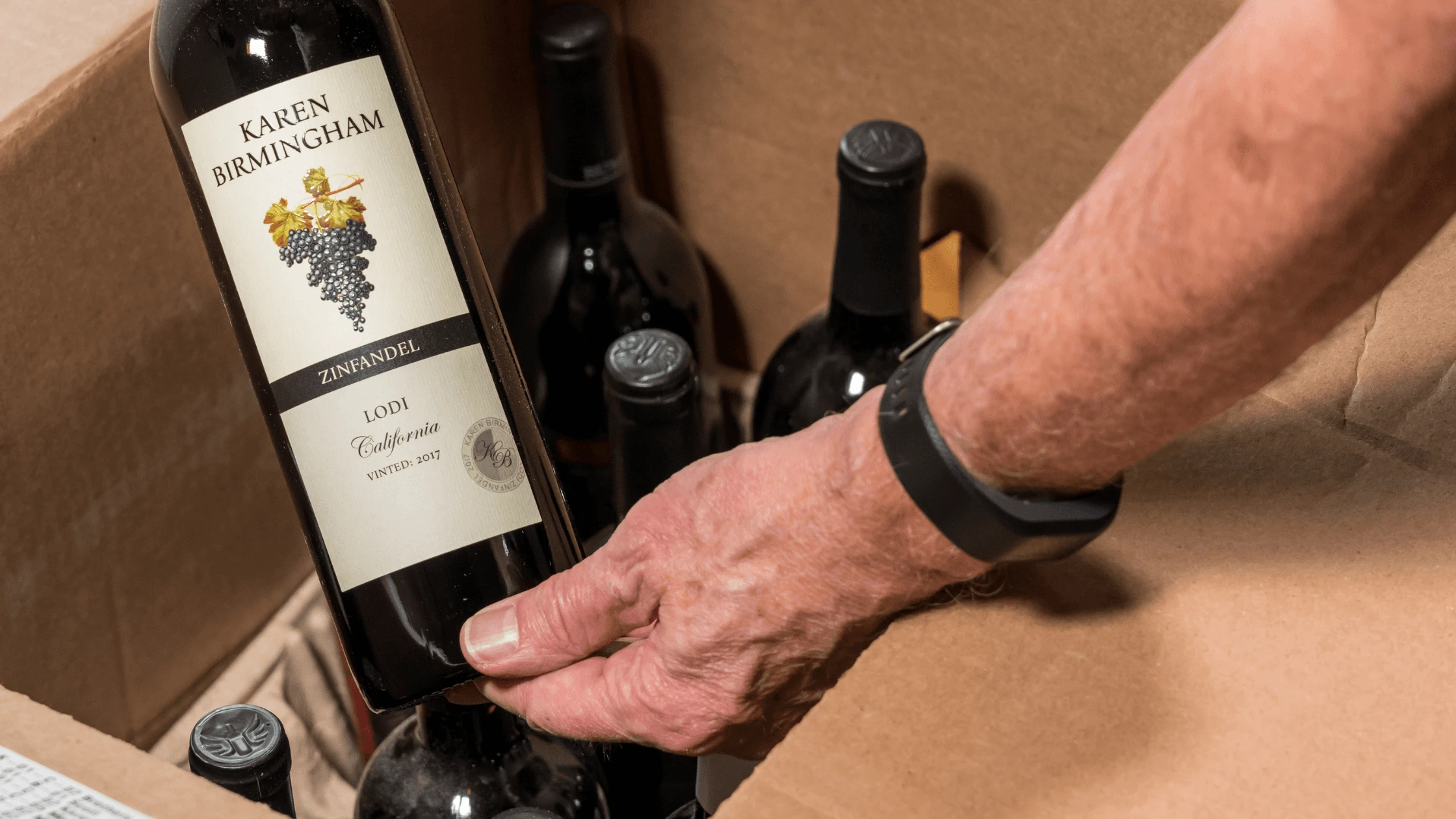
Should wine travel upright or on its side?
Collectors who have kept their bottles on their sides for years often wonder whether they should travel that way, too. During transport, the packaging design is the best guide: bottles should sit securely in the position their inserts were made to support. Turning a carton sideways simply to keep the wine horizontal can undermine that protection.
A short period upright is generally unproblematic for a sound cork-sealed bottle. Once the wine returns to long-term storage, natural-cork bottles are commonly laid horizontally; screwcap bottles can be stored upright. [2] For an extended journey involving storage along the way, agree on the packing and storage approach with your specialist.
Give mature bottles individual attention
A young Cabernet and a twenty-year-old Pinot Noir may share a rack, but they need not receive identical treatment on moving day. Mature wines can bring delicate labels, less resilient closures, and accumulated sediment into the equation. Identify these bottles for the packing team and make them easy to locate when the shipment arrives. Particularly fragile or rare bottles deserve an individual assessment before they travel.
Settle the paperwork before moving day
A private collection can cross several state lines in a single day, and the requirements are worth checking early. Your mover should be able to explain its policy for carrying wine, while the destination state's alcohol authority can clarify the rules that apply to your collection. Relocating bottles you already own is not necessarily treated in the same way as ordering wine from a retailer. [1]
An international relocation adds customs documentation, import requirements, and possible duties or taxes. If a substantial collection is entering the United States, TTB advises speaking with the CBP entry branch at the intended port before shipment. State requirements also apply. Resolving these details in advance helps you plan the transport and any storage needed while the shipment is cleared. [4]
This is also a good moment to speak with your insurance advisor. Ask how your bottles are covered during packing, transit, temporary storage, and delivery, including any exclusions for temperature damage. Confirm the valuation basis and any required packing standards. Specialist wine policies vary, and a mover's own insurance should not be assumed to provide the protection you want for the collection. [5]
Have the new cellar ready to receive the wine
A new cellar is ready for wine when it can maintain suitable conditions reliably. Run the cooling system ahead of delivery and review its temperature readings, allowing time to address any problems. It is also worth checking the practical fit: generous-looking racks can fill surprisingly quickly when the collection includes Champagne, broad Burgundy bottles, magnums, and original cases.
At a second home, arrange for a trusted person to receive the delivery if you will not be there yourself. Share the inventory, cellar layout, and contact details in advance. Keys, loading access, elevator bookings, and delivery hours are small details that make a considerable difference when several hundred bottles arrive together.
If construction is running behind, professional wine storage can give you welcome flexibility. Choose a facility with suitable environmental monitoring and clear backup arrangements, and agree on how the collection will later reach your home. It is often more practical to delay the final cellar delivery than to find temporary space for cases once they are already at the property.
How to move a wine cellar's equipment
If you are considering how to move a wine cellar as well as its contents, treat the equipment as a separate part of the project. Built-in racks may be adaptable, but a cooling system selected for one room may not suit another. Have the contractor assess what can sensibly be reused before anything is dismantled.
A freestanding wine refrigerator brings its own timing considerations. Follow the manufacturer's guidance for transport and restarting, and allow it to return to its operating temperature before reloading. If it is your only suitable storage, arrange temporary accommodation for the wine during that interval.
If you are building a new room, our guide to the cost of a custom wine cellar explains the main construction, cooling, and capacity considerations.
Give the collection a careful welcome
Allow a little time for the handover rather than having the cases disappear straight into the cellar. Compare box numbers and quantities with the inventory, and photograph any damaged cartons, leaks, or other concerns while the mover is present. If something needs investigating, keep the packaging and temperature records and notify the appropriate company promptly.
Once checked, the wine can go directly into its prepared storage. Updating the inventory as you put bottles away saves a second round of sorting later and makes it easier to arrange the new cellar around the wines you reach for most often.
How long should wine rest after moving?
It is tempting to choose something special for the first dinner in a new home. A younger wine may be the easier choice, while mature or unfiltered bottles benefit from being left undisturbed until any sediment stirred up during transport has settled. There is no universal waiting period for every wine, and claims about travel-related “bottle shock” should be distinguished from this practical serving consideration. [6]
For an older bottle you hope to open soon, allow it to settle and return to an appropriate serving temperature, then handle it gently when opening and decanting. Rest can help with sediment; it cannot undo damage caused by excessive heat.
A few details to confirm before the wine leaves
- Inventory completed, photographs saved, and boxes numbered.
- Transport method, temperature arrangements, and delivery timing confirmed.
- Carrier acceptance, applicable transport rules, and insurance checked.
- Bottles packed securely in suitable cartons and inserts.
- Receiving cellar or temporary storage ready and accessible.
- A named person available to check the collection at loading and delivery.
Moving a wine collection safely is largely a matter of extending good cellar care through an unfamiliar journey. Once the route, handling, weather protection, and receiving arrangements are thoughtfully planned, you can look forward to putting the collection in its new home and choosing which bottle to open first.
Frequently asked questions
How do you move wine a short distance?
For a small local move, securely packed bottles can travel in the climate-controlled part of your vehicle. Choose a direct journey in mild conditions, keep the wine in suitable storage until departure, and have the destination ready to receive it.
Can you move wine in the trunk of a car?
The climate-controlled passenger or cargo area is preferable to a separate trunk, particularly in hot or cold weather. Secure the cases so they cannot slide, and remember that cabin temperature control stops protecting the wine when the vehicle is parked and switched off.
Can you ship a private wine collection by courier?
It is worth checking directly before making arrangements. Carriers have specific rules for alcohol, and acceptance depends on the shipment and applicable laws. A specialist in private wine relocations can help establish a suitable route; buying approved bottle packaging alone does not make a shipment eligible.
How much does it cost to move a wine collection?
The most useful estimate is an itemized quote for your actual collection and route. Bottle count, formats, distance, packing, access, temperature control, and temporary storage all influence the cost. Ask each company to price the same service so you can see what the difference buys you.
What is the safest way to move an expensive wine collection?
For a valuable cellar, an experienced wine transport specialist is a sensible starting point. Look for documented condition checks, appropriate insurance, and clear temperature and handling arrangements, including overnight stops and delays. The best proposal should explain how the bottles will be cared for from your current racks to their new home.
Sources
[1] Chubb: Moving your wine collection to your new home.
[2] Wine & Spirit Education Trust: Temperatures of wine service and storage.
[3] FedEx: Resources, tools, and tips for shipping alcohol.
[4] Alcohol and Tobacco Tax and Trade Bureau: Personal Importation of Beverage Alcohol Products.
[5] Chubb: Wine & Spirits Insurance.
[6] Decanter: Can wine really have ‘bottle shock’ after travel?