Delaire Graff: Where Diamonds Meet the Vine
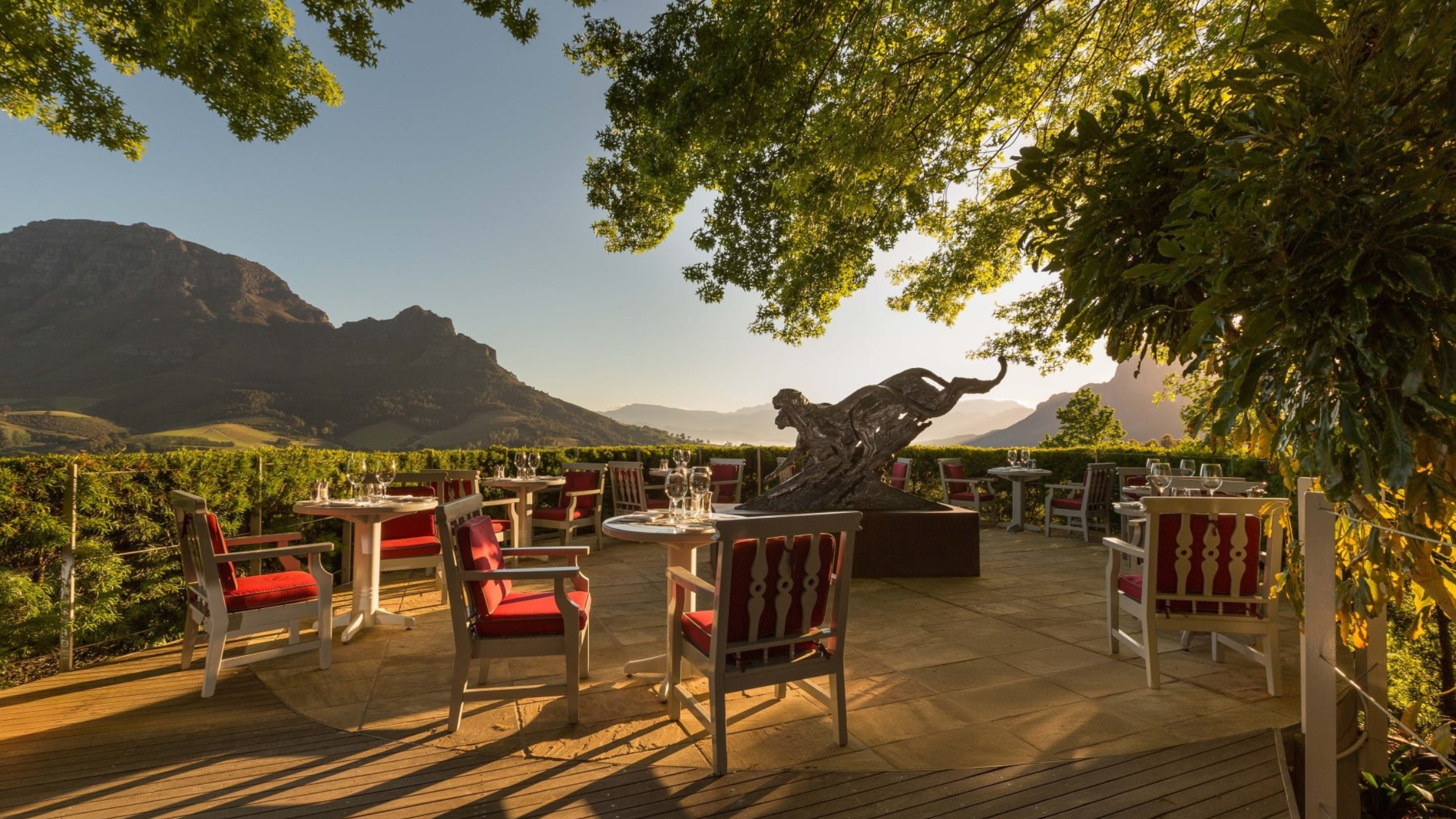
High above the Banghoek Valley, a remarkable South African wine estate brings together the worlds of fine jewelry, contemporary art, and winemaking, with a story that begins long before its famous owner arrived.
There are few places in the Cape Winelands where the setting makes the same first impression as Delaire Graff. The road climbs through the Helshoogte Pass, leaving Stellenbosch behind as vineyards rise toward the mountains. At the summit, the landscape opens dramatically. The Banghoek Valley stretches below, framed by the Simonsberg and Groot Drakenstein mountains, while gardens, sculpture, and carefully considered architecture share the foreground.
It is a setting that seems almost deliberately composed, yet the mountains and vineyards were here long before the estate became one of South Africa's most recognizable luxury destinations.
Today, Delaire Graff is associated with exceptional hospitality, an important collection of African art, and the name of one of the world's most celebrated jewelers. Beneath that polished exterior, however, is a serious wine estate with a history rooted in the development of modern South African winemaking.
Its story brings together two men from very different worlds: a wine writer who recognized the potential of a remarkable hillside and a London jeweler whose eye for extraordinary natural beauty would transform it.
From London's East End to the Cape Winelands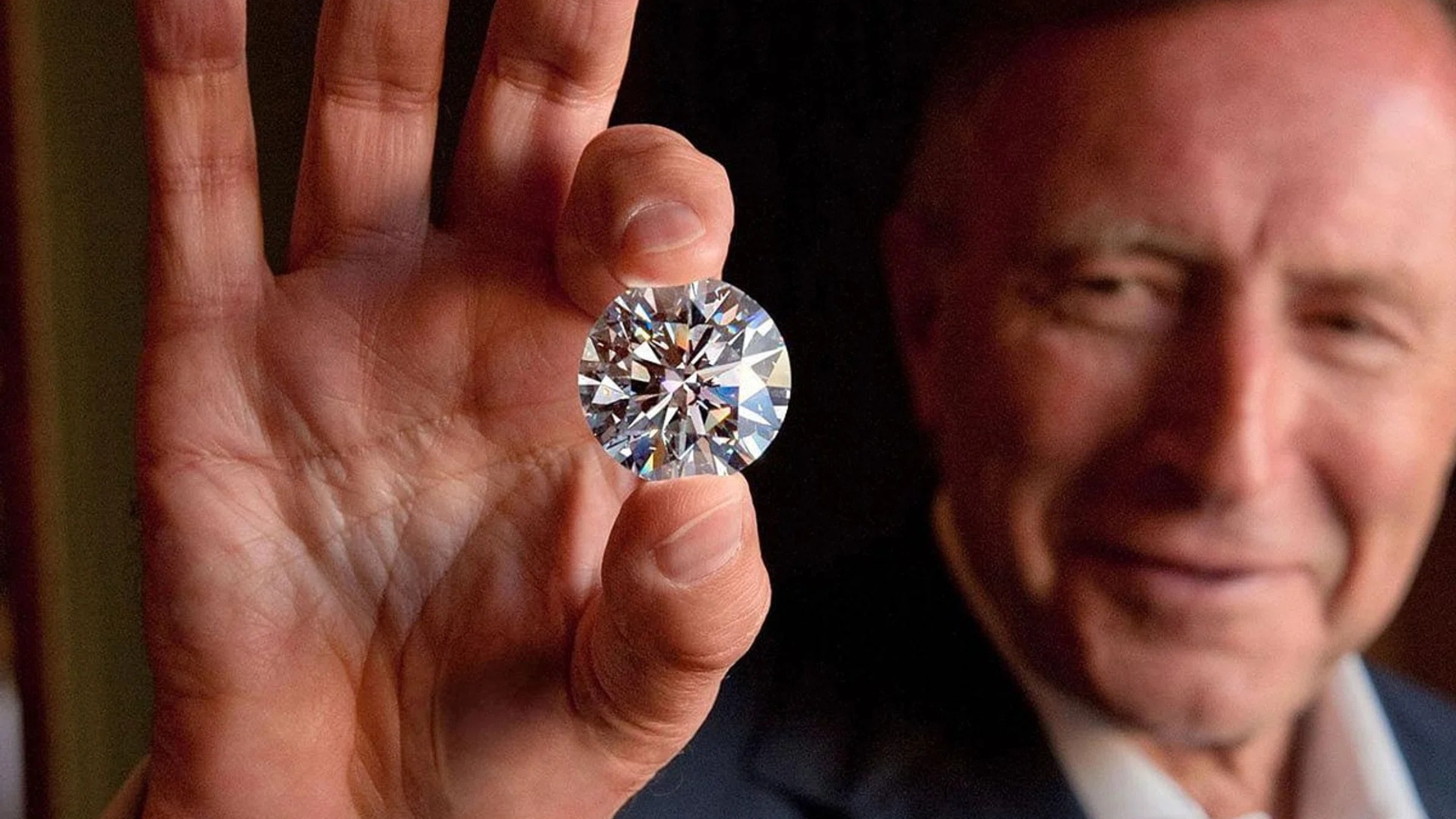
Laurence Graff's beginnings were far removed from the mountain vineyards of Stellenbosch.
Born in London in 1938 and raised in the city's East End, Graff entered the jewelry trade as a young apprentice. He learned the painstaking work of handling precious stones and developed an understanding of the qualities that make one diamond different from another.
In 1960, at just 22, he established Graff Diamonds. What followed was an extraordinary career built around acquiring, cutting, and presenting some of the world's most remarkable gemstones.
Graff became known for his willingness to work with exceptional stones, including diamonds whose size, color, or rarity made them particularly challenging. Among the famous gems associated with his career are the Lesotho Promise, the Wittelsbach-Graff Diamond, and the enormous Lesedi La Rona.
His success depended on more than recognizing beauty. A rough diamond requires patience, judgment, and an understanding of what lies beneath its surface. Cutting it is an irreversible process, and every decision affects the final result.
There is a natural parallel with winemaking, where the quality of the raw material establishes the possibilities, but experience and careful decisions determine how fully those possibilities are realized.
Graff's appreciation for South Africa eventually extended beyond its diamonds. During his visits to the Cape, he developed an interest in the country's wines and landscapes. In 2003, he encountered a property overlooking the Banghoek Valley that would become one of his most ambitious projects.
The estate was called Delaire, and its reputation had already been established by another influential figure in South African wine.
The Estate Before the Diamonds
In 1982, John and Erica Platter purchased a Stellenbosch farm then known as Avontuur.
John Platter was already an important voice in South African wine. Together with Erica, he had established the wine guide that would become one of the country's most respected annual publications, helping readers discover producers and understand an industry that was undergoing considerable change.
The couple recognized the promise of the elevated vineyards overlooking the Banghoek Valley. They renamed the property Delaire, a name associated with its remarkable position above the surrounding landscape.
It was an appropriate choice. From the upper slopes, the vineyards appear suspended between mountains and sky, with the valley unfolding far below.
The Platters helped establish Delaire's winemaking identity, demonstrating that this mountainous corner of Stellenbosch could produce wines of considerable character. The property's reputation continued to develop after they sold it.
When Laurence Graff acquired Delaire in 2003, he inherited a place with established vineyards, a distinctive location, and a meaningful connection to South African wine history.
Over the following six years, the estate underwent a substantial transformation. A modern winery was developed, hospitality facilities were redesigned, and art became an integral part of the property.
Delaire Graff opened in its new form in 2009, combining the original estate's winemaking heritage with Graff's broader vision.
The Character of Banghoek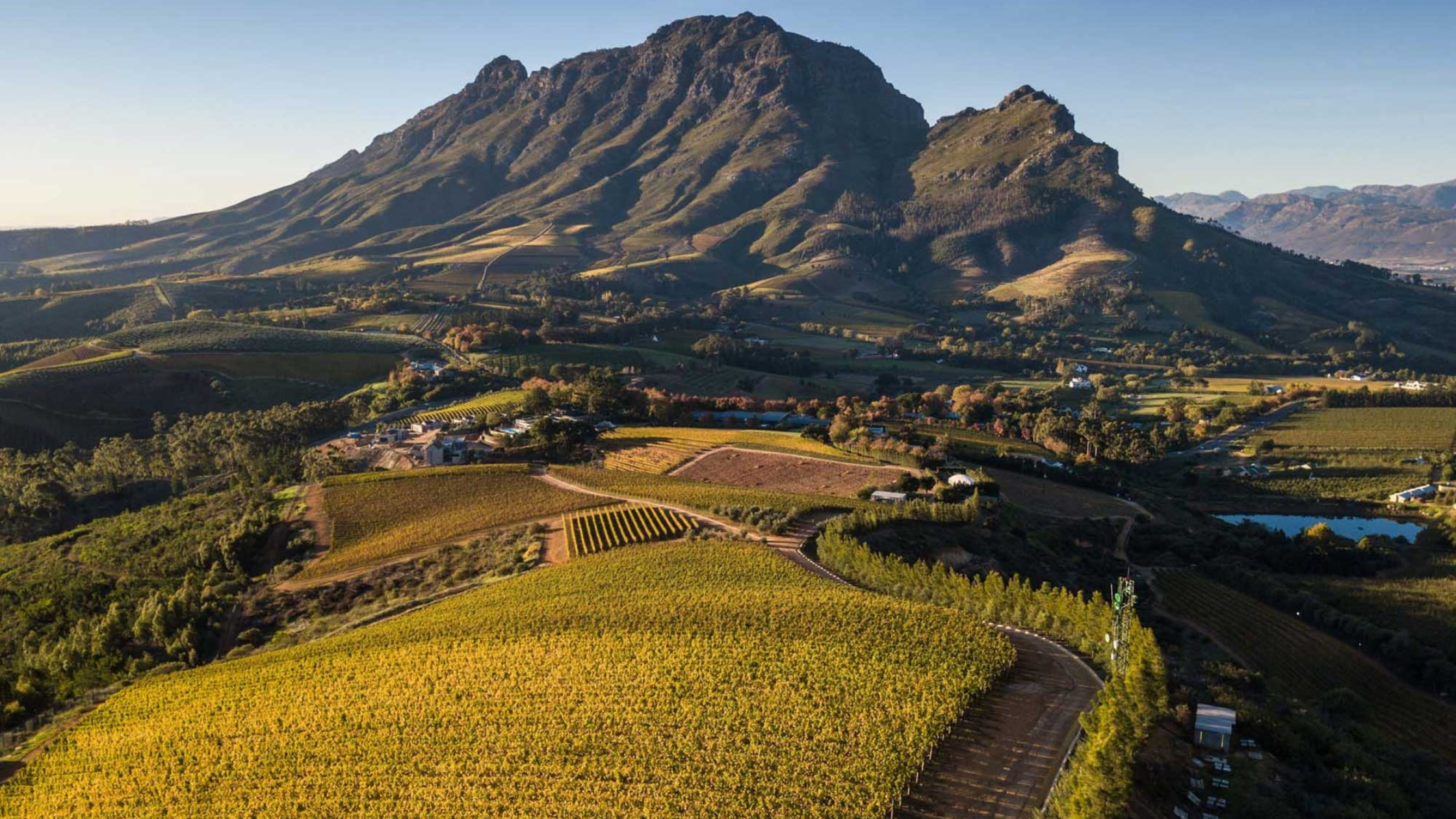
The Banghoek Valley occupies a distinctive position within Stellenbosch, where steep mountain slopes, elevation, and cooling air create growing conditions that differ considerably from the warmer valley floor.
Delaire Graff's vineyards lie along the Helshoogte Pass, where the influence of altitude and the surrounding mountains helps moderate the region's abundant sunshine.
The combination encourages flavor development while allowing the grapes to retain the freshness and structure that give fine wines their balance.
Cabernet Sauvignon and Cabernet Franc are particularly important here, producing wines with concentrated dark fruit, aromatic complexity, and firm but refined tannins. Chardonnay also benefits from the conditions, developing ripe orchard-fruit character while retaining the acidity needed to support its texture.
The vineyard work is supported by a gravity-fed winery designed to handle the fruit gently and give the winemaking team greater control over each stage of production.
Under winemaker Morné Vrey, the estate has developed a portfolio that extends from bright, youthful wines to concentrated reds intended for years in the cellar.
What makes the range interesting is not simply its breadth, but the different expressions of the Cape that emerge from it.
Where Sustainability Takes Root
For all the attention given to the beauty of Delaire Graff's surroundings, preserving that landscape requires work that is considerably less visible.
The estate's approach to sustainability begins in the vineyards, where the relationship between soil, water, and the surrounding natural environment is treated as an essential part of producing quality wine. The vines are tended and harvested by hand, while carefully managed irrigation helps conserve water in a region where dry summers are part of the growing season.
Drip irrigation and soil moisture monitoring allow water to be applied more precisely, while cover crops help protect the soil against erosion. These are practical decisions, but their importance extends beyond a single harvest. Healthy vineyard soils and responsible water management help maintain the conditions on which future vintages depend.
Beyond the vines, the estate's gardens contain more than 350 plant species, approximately 70 percent of them indigenous. Water-wise planting and areas of preserved fynbos provide habitat for local birds and insects, maintaining a connection between the cultivated vineyards and the wider Banghoek landscape.
Even the estate's kitchens contribute to this cycle. Food scraps and organic waste are collected and processed through an established wormery, producing nutrient-rich compost that returns to the gardens and growing areas. What might otherwise be discarded becomes part of the estate's approach to nourishing the land.
Sustainability also extends to the buildings and daily operations. In 2026, Delaire Graff reported that 55 percent of its electricity came from renewable sources, with an ambition to reach 100 percent. Water conservation, locally sourced produce, and efforts to reduce single-use materials form part of the same broader approach.
The estate's philosophy is expressed in three simple principles: "Create responsibly, Give whole-heartedly, Leave no trace."
For Delaire Graff, the challenge is to balance the expectations of a world-class luxury destination with the responsibilities of working in an environmentally sensitive wine region. Its efforts reflect an understanding that the natural beauty attracting visitors to the estate is also something that must be protected.
And in a place where the character of the wines is so closely connected to the mountains, soils, and climate, caring for that environment is inseparable from caring for the vineyards themselves.
A Lighter Side of Delaire Graff
The estate's more approachable wines reveal a different personality from the structured reds for which Stellenbosch is famous.
The Delaire Graff Cabernet Franc Rosé 2026 is a particularly attractive example.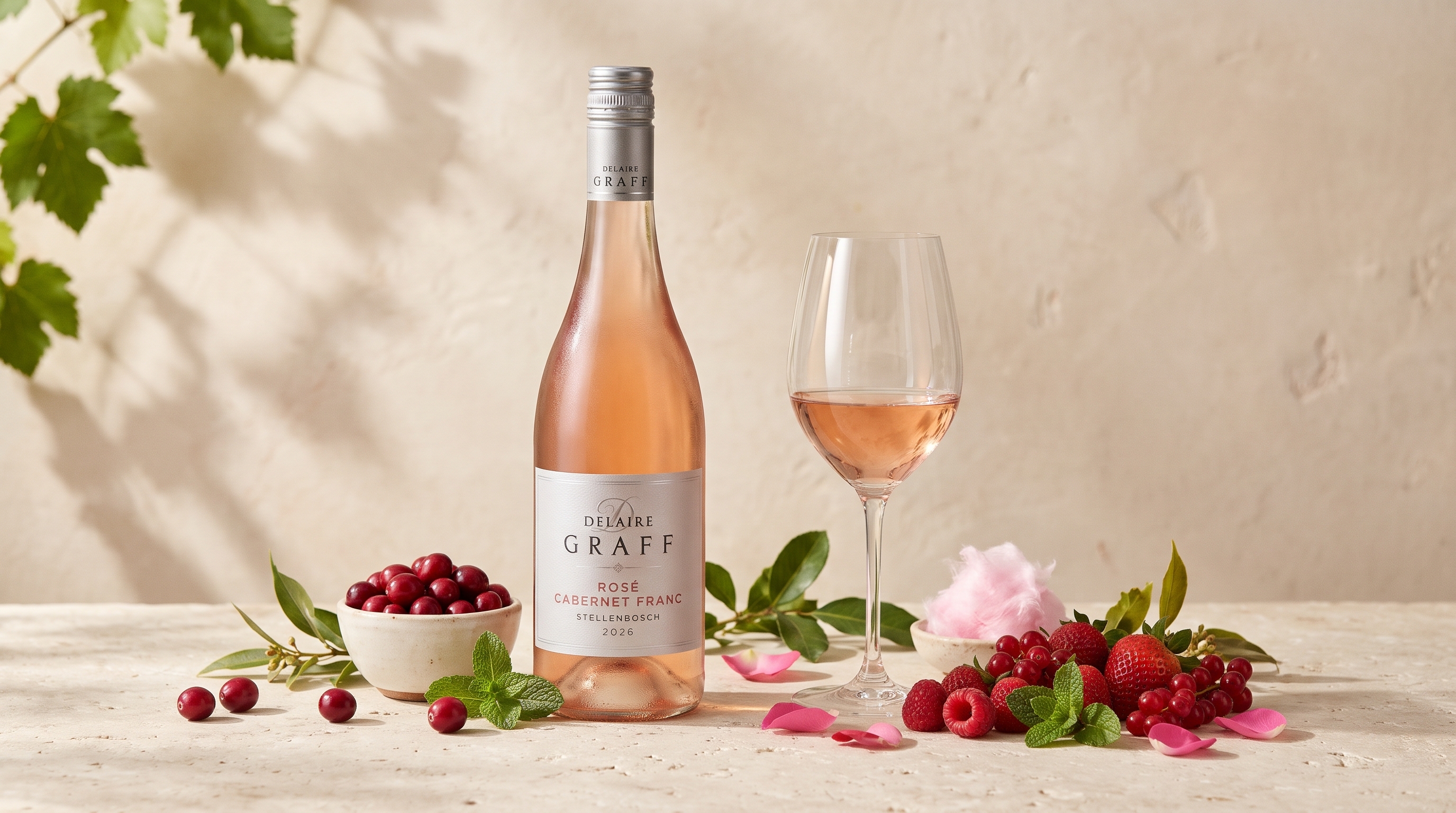
Made entirely from Cabernet Franc, with fruit sourced from the Simonsberg and Helderberg slopes, it captures the variety's naturally fragrant character. Crushed red berries and delicate herbal notes rise from the glass, with a subtle suggestion of mint beneath the fruit.
The palate has more texture than its pale, refreshing appearance might suggest. Time on the fine lees contributes additional breadth, while a small barrel-fermented component adds depth without compromising the wine's lively acidity.
It is a rosé suited to the table, particularly alongside grilled prawns, Mediterranean vegetables, or a leisurely outdoor lunch.
The Banghoek Reserve Chardonnay 2025 offers a different expression of the estate's vineyards.
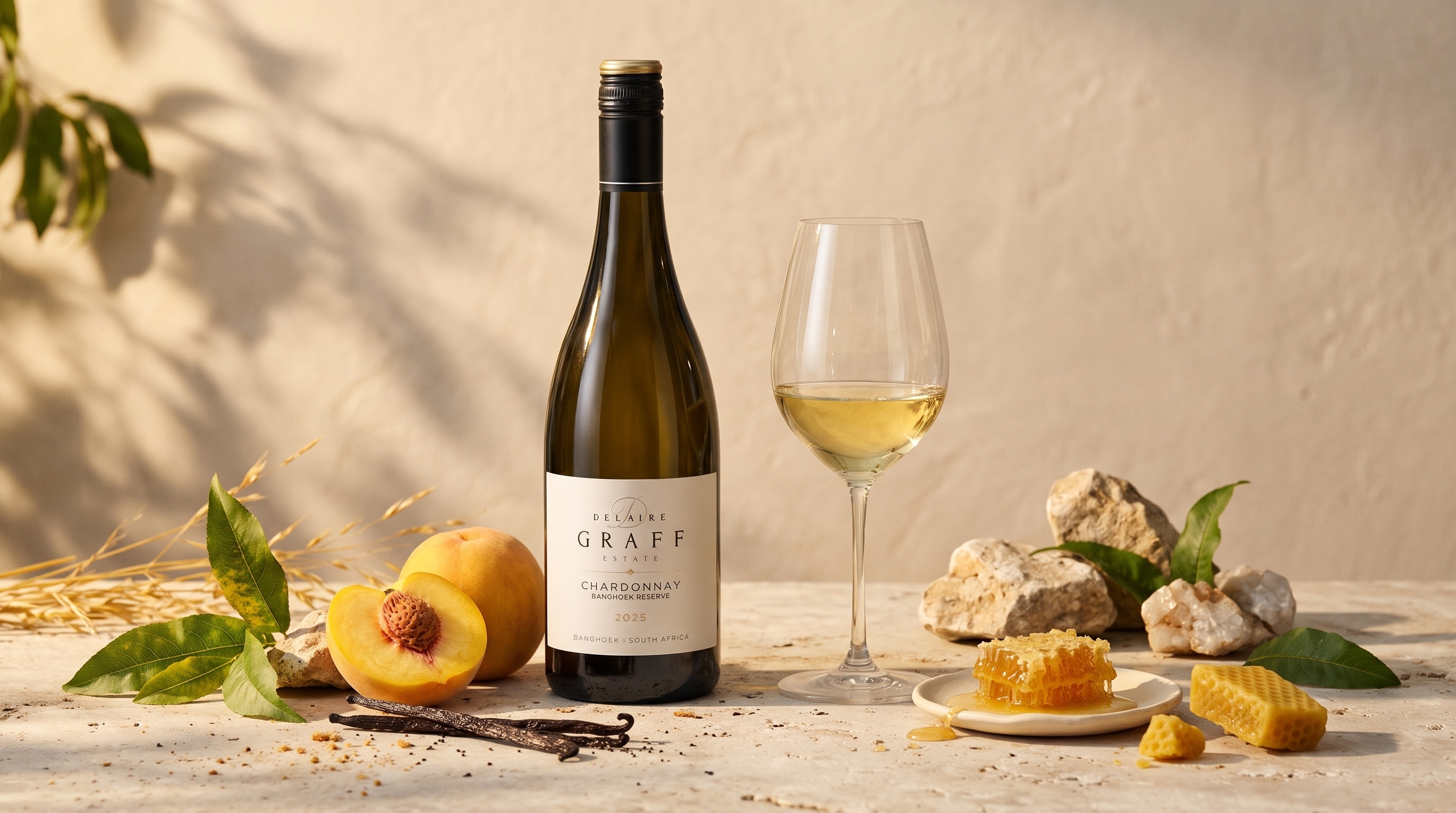
Ripe peach and golden apple introduce the wine, followed by honeycomb, vanilla, and a delicate citrus note. Ten months in French oak lend structure and a creamy texture, but the winemaking deliberately avoids malolactic fermentation, preserving a fresh, mineral quality through the finish.
The result is a Chardonnay that carries richness without becoming heavy, allowing the fruit and acidity to remain in balance.
These two wines illustrate how the estate approaches freshness, whether through the aromatic lift of Cabernet Franc or the carefully measured oak influence of Chardonnay.
A Diamond Captured in a Glass
Perhaps no wine in the Delaire Graff collection connects the estate's two worlds as directly as Sunrise Brut.
The story begins with an extraordinary yellow diamond discovered in South Africa in 2009.
Weighing 221.81 carats in its rough form, the stone attracted Laurence Graff's attention for its remarkable color, shape, and potential. After months of cutting and polishing, it emerged as the Delaire Sunrise, a 118.08-carat Fancy Vivid Yellow diamond.
Its name was inspired by the African sunrise over Delaire Graff Estate, when the first light reaches the Simonsberg mountains and gradually illuminates the Banghoek Valley.
The connection was later carried into the estate's wine portfolio through the creation of Delaire Graff Sunrise Brut, a Cap Classique sparkling wine named in honor of the diamond.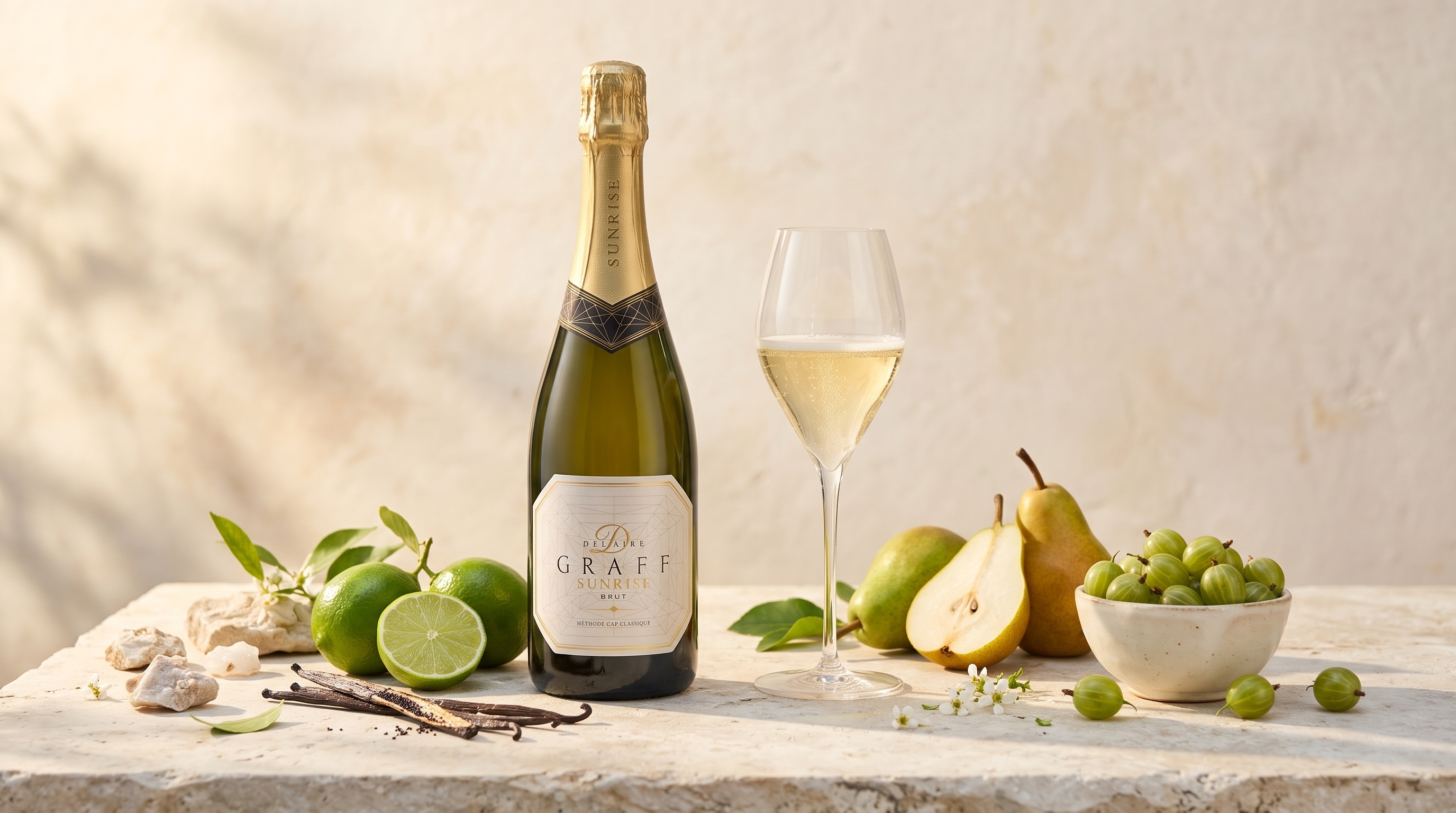
Made from Chenin Blanc, Chardonnay, and a small proportion of Cabernet Franc, Sunrise Brut draws inspiration from the sparkling wines of France's Loire Valley while retaining a distinctly South African character.
The wine opens with fresh gooseberry and melon, followed by lime, pear, and a delicate suggestion of vanilla. Fine bubbles give the palate an elegant texture, while bright acidity maintains freshness through the finish.
Extended time on the lees contributes additional complexity without obscuring the fruit.
There is something particularly fitting about the relationship between the wine and its namesake. Both begin with natural materials whose qualities are revealed through patience and careful craftsmanship, although the processes themselves could hardly be more different.
For Delaire Graff, Sunrise Brut provides a memorable connection between the world of rare diamonds and the vineyards of Stellenbosch.
Cabernet Sauvignon and the Mountain's Influence
Stellenbosch has built much of its international reputation on Cabernet Sauvignon, and Delaire Graff's interpretation reflects the concentration and structure associated with the region's mountain vineyards.
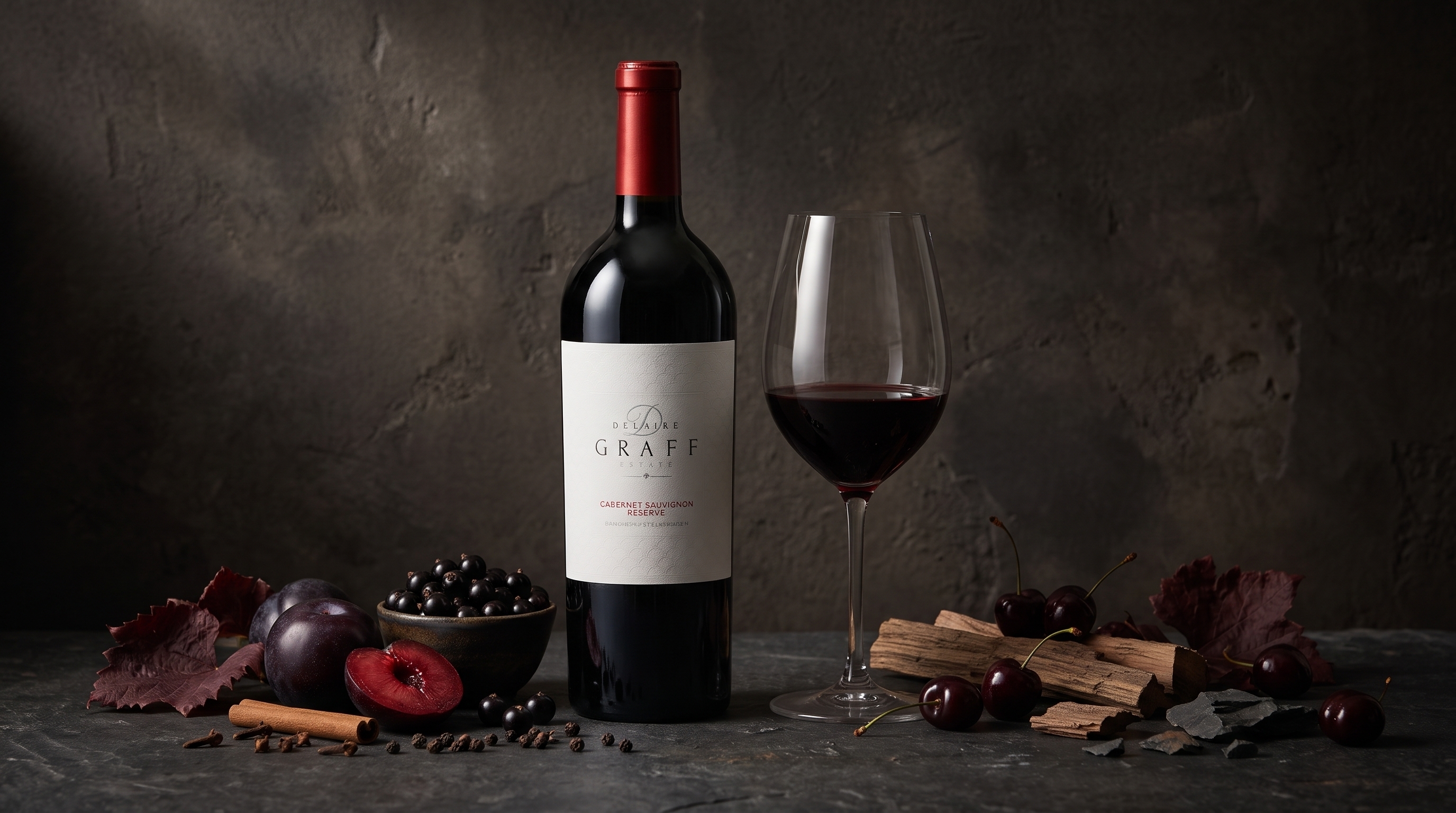
The Delaire Graff Reserve Cabernet Sauvignon 2022 presents dark cassis, black cherry, and ripe plum, with carefully integrated oak spice providing depth.
Its character is generous but controlled. The tannins are polished, the fruit remains concentrated, and the finish carries the savory complexity that develops from extended maturation in French oak.
Sixteen months in barrel, with a substantial proportion of new French oak, contribute structure and aging potential.
This is a Cabernet Sauvignon that rewards time in the glass and has the capacity to develop further in the cellar.
Higher in the estate's red wine collection sits The Banghoek 2022, a Bordeaux-style blend that places Cabernet Franc at the center of its character.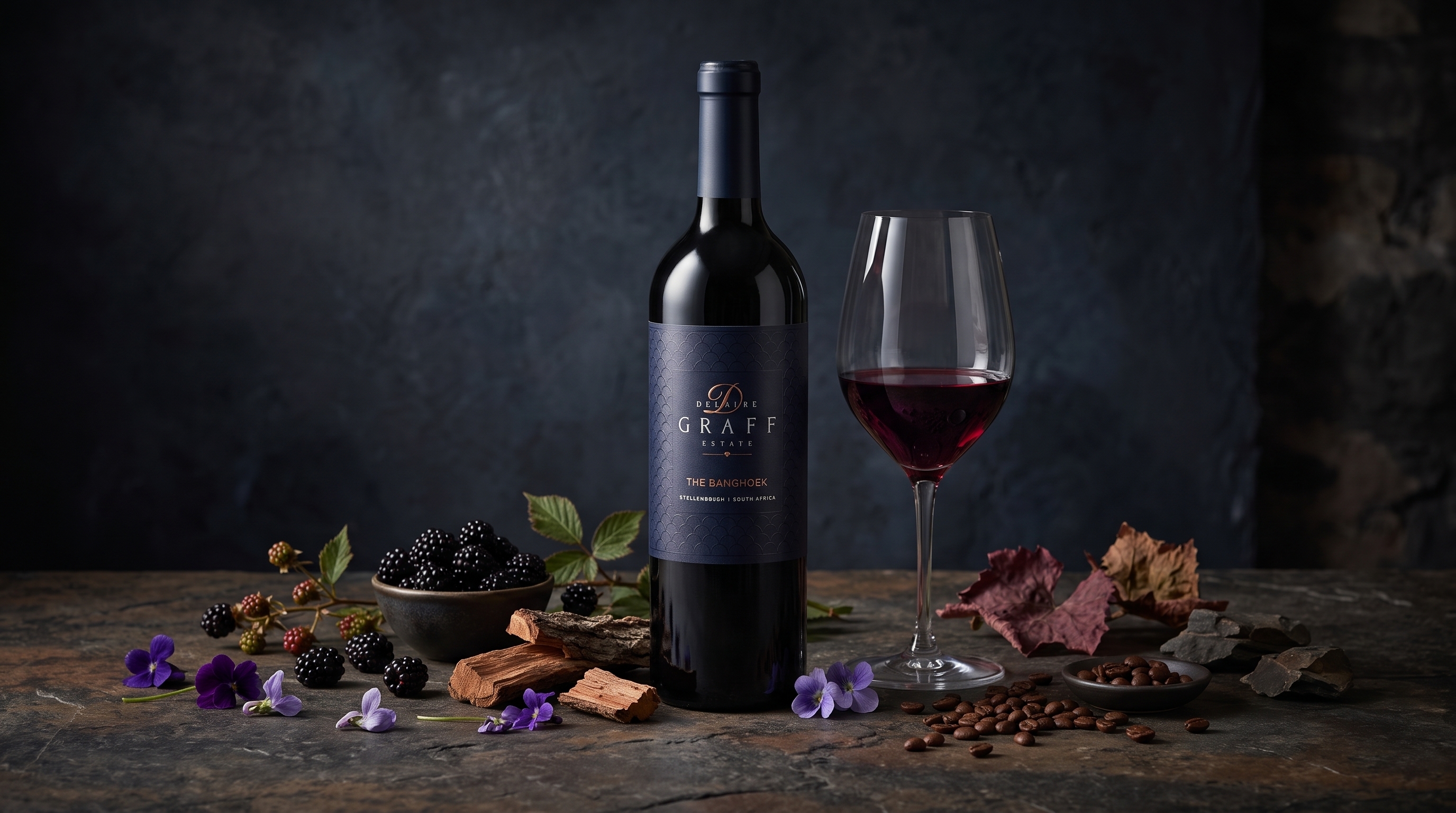
Supported by Cabernet Sauvignon, Petit Verdot, and Malbec, the wine offers black cherry, dark berries, violets, and fresh herbs, with finely integrated oak spice and a savory suggestion of espresso.
The Cabernet Franc brings aromatic definition and freshness, while the supporting varieties contribute depth, structure, and concentration.
The Banghoek is positioned as the second wine to the estate's flagship Laurence Graff Reserve, yet it has a personality that stands comfortably on its own.
Where the Reserve Cabernet Sauvignon emphasizes the depth and classical structure of Stellenbosch Cabernet, The Banghoek explores the elegance and complexity possible through blending.
Together, they demonstrate the versatility of the estate's mountain-grown Bordeaux varieties.
Beyond Stellenbosch: A Taste of Swartland
Although Delaire Graff is firmly associated with the Banghoek Valley, its portfolio also reaches beyond Stellenbosch.
The Delaire Graff Cape Vintage 2022 comes from the Swartland, a region northwest of Cape Town known for its warm climate, old vineyards, and increasingly distinctive wines.
Produced from fruit harvested from approximately 50-year-old vines, this fortified, port-style wine offers a richer and more contemplative expression of the Cape.
Ripe red berries, warm spice, and subtle oak character give the wine immediate appeal, while firm underlying structure and vibrant acidity prevent the sweetness and concentration from becoming overwhelming.
The grapes are fortified during fermentation, preserving natural sweetness, before the wine matures in seasoned French oak and receives additional bottle aging.
Over time, its fruit is expected to develop more complex notes of licorice, wild herbs, and earthy spice.
It is a wine suited to a slower moment at the end of a meal, perhaps with aged cheese or dark chocolate, and a reminder that Delaire Graff's winemaking interests extend beyond the vineyards immediately surrounding the estate.
More Than a Beautiful Setting
There is an obvious temptation to define Delaire Graff through its most visible qualities: the extraordinary views, the carefully arranged gardens, the art collection, and the association with one of the world's great jewelry houses.
Those elements are undeniably part of its appeal, but they tell only part of the story.
The estate's foundations were laid by John and Erica Platter, whose belief in the potential of this hillside helped establish its place in South African wine. Laurence Graff subsequently brought the resources and imagination to develop that foundation into something internationally distinctive.
Today, the wines offer their own account of the property and its wider influences. The Cabernet Franc Rosé captures the freshness of the Cape's mountain vineyards, the Chardonnay reveals the balance between fruit and oak, and Sunrise Brut connects a remarkable diamond with the first light over the Banghoek Valley.
The Reserve Cabernet Sauvignon and The Banghoek demonstrate the depth and sophistication possible from Stellenbosch's Bordeaux varieties, while Cape Vintage introduces the warmth and character of the Swartland.
Each belongs to a different part of the estate's story.
And perhaps that is what makes Delaire Graff particularly interesting. Behind the polished presentation is a property whose identity has been shaped by people with very different forms of expertise, united by an appreciation for exceptional natural materials and what can be achieved through careful work.
High above Stellenbosch, the vineyards continue to provide the most important part of that story.
FAQ
Where is Delaire Graff located?
The estate sits along the Helshoogte Pass, overlooking the Banghoek Valley near Stellenbosch, South Africa. Its elevated position offers sweeping mountain views, while the surrounding vineyards benefit from cooler conditions that help preserve freshness and develop complexity in the grapes.
Who owns the estate?
Delaire Graff belongs to Laurence Graff, the British jeweler and founder of Graff Diamonds. He purchased the property in 2003 and transformed it into a destination combining winemaking, contemporary African art, fine dining, and luxury hospitality. The estate reopened in its new form in 2009.
What makes the Banghoek Valley special for growing grapes?
The valley's mountainous terrain, elevated vineyards, and cooling air create conditions that encourage gradual ripening. These influences help grapes develop concentrated flavors while retaining natural acidity, particularly benefiting varieties such as Cabernet Sauvignon, Cabernet Franc, and Chardonnay.
What is the story behind Sunrise Brut?
This sparkling wine takes its name from the Delaire Sunrise, an extraordinary yellow diamond associated with Laurence Graff. Its name reflects the golden light that falls across the mountains at daybreak. The wine brings that inspiration into a Cap Classique made from Chenin Blanc, Chardonnay, and Cabernet Franc.
How does the winery approach sustainability?
Environmental responsibility is reflected in vineyard management, water conservation, indigenous planting, and efforts to reduce waste. Cover crops help protect the soil, while organic material is composted and returned to the estate's growing areas. These practices support the long-term health of the land and surrounding environment.
Can visitors enjoy more than wine tasting?
Yes. The property offers restaurants, luxury accommodation, landscaped gardens, a spa, and an impressive collection of African art. Its location above the Banghoek Valley also makes the surrounding scenery an important part of the experience, whether visiting for a tasting, a meal, or an extended stay.